April 15, 2020

This disconcerting summer

It’s been a strange summer alright. And a challenging one. Since writing my last blog post in the middle of what has been a catastrophic bushfire season across much of the mainland, followed by floods in other parts of the country, and now the new and unknown reality of coronavirus – or COVID-19 – most of the world is now living in lockdown, physically isolated from family, friends and work, and existing in a surreal kind of silence.

The pandemic has certainly changed the face of Australia, and although it’s concentrating the minds of our leaders, most state premiers have risen to the challenge very well. Others not so much, but it’s been surprising and encouraging to note, (after a rocky start in the case of PM Morrison), that Tasmania’s premier, and Scotty From Marketing, are handling the crisis efficiently and with authority. I’m no fan of either man, but credit where it’s due and they do appear to be steering the state and the country well at the moment.
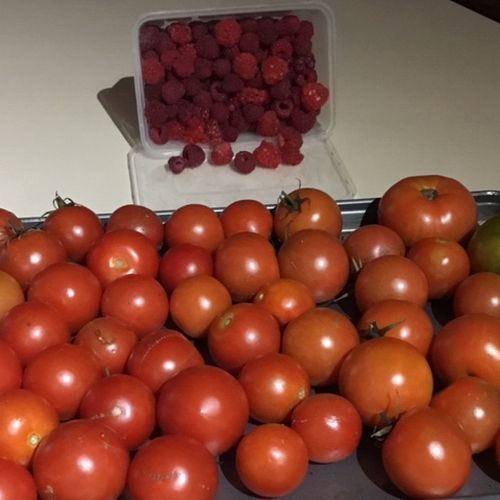
Certainly these extraordinary times put into perspective the mundane and micro nature of the personal everyday. Those raspberries and tomatoes that were proving to be so tardy back in February have more than made up for their production delay in the weeks since. The natural world shows scant regard for the concerns of humanity, and both crops have forged on regardless. Until a few days ago picking them was a daily task that took at least an hour, such is their time-consuming abundance, but the dessert of raspberries we’ve now enjoyed every evening for weeks has been a joy. Unsurprisingly, tomatoes have also been a fixture in all but a very few of our meals – with the exception of breakfast.

As anticipated processing tomatoes has also been a regular item on my To Do list during the past few weeks, so the freezer is now full to capacity. Few meals are served without tomatoes featuring somewhere on the plate, and although friends and neighbours have thankfully helped relieve us of some of this excess bounty, there are few signs production is slowing. It makes up for their earlier tardiness of course, but I will not be upset when I can finally declare this particular harvest over.

Lockdown life is otherwise proving no hardship, which is my good fortune, and I’m well aware of that fact. We have space to move, a garden to keep us exercised and occupied – and plenty of tasks indoors to catch up on. And quite apart from anything else there are books. Plenty of them, and for the first time in years, a bit more time to read them without feeling guilty.

And, even more importantly, there is time (and fewer excuses!) to write my own major project, even if in my determination to catch up on some of those aforementioned tasks, it’s taken a little while to settle down to doing so on a regular and determined basis.

Share this post on socials

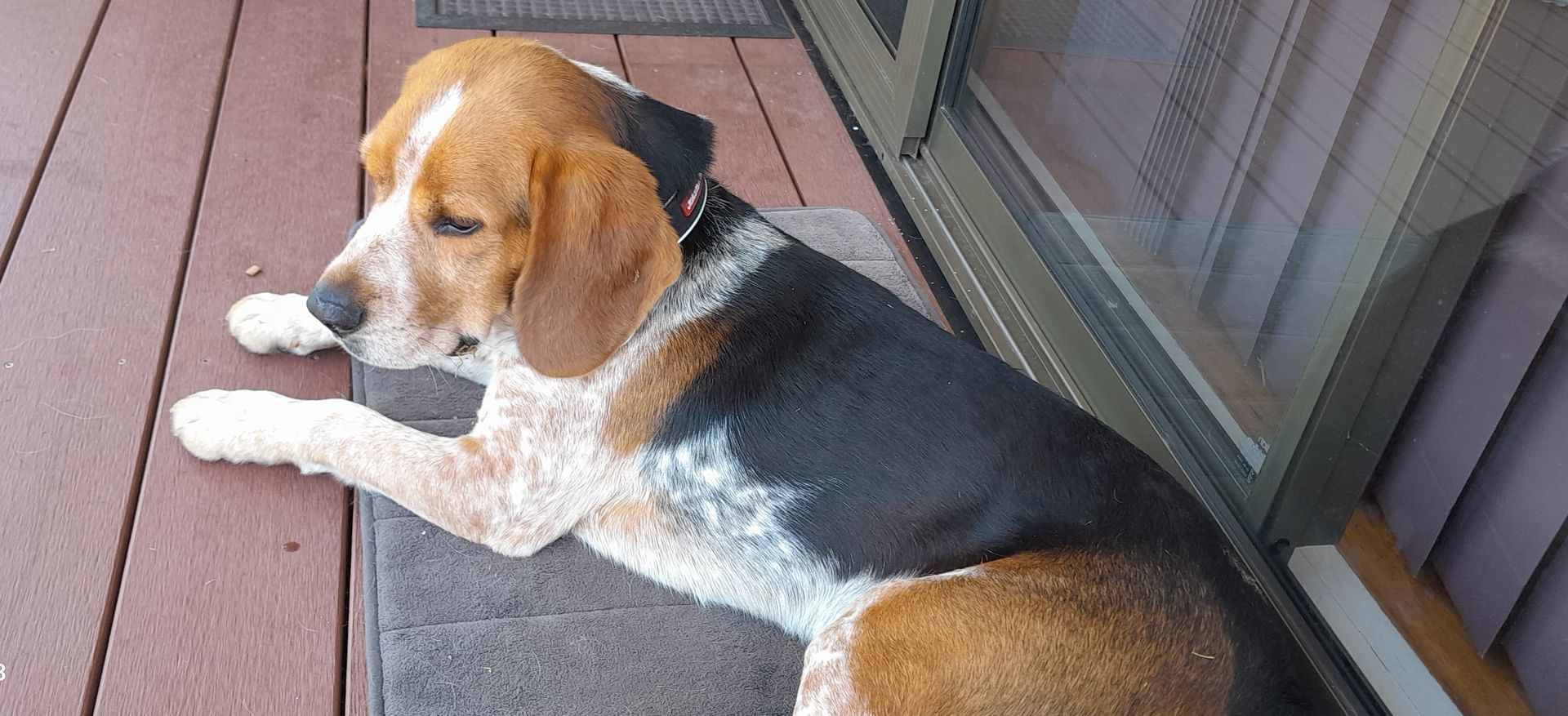
Badger the beagle
By Anne Layton-Bennett August 4, 2026
An Animals Australia article that highlights the use of toxicity testing of chemicals on animals is still being done around the globe.
By Anne Layton-Bennett July 22, 2026
Attracting the interest of a publisher for this story of a community’s campaign to stop what would have been ‘the world’s fourth largest pulp mill’ being built was never going to be easy, but hoping the first of two 3-minute Literary Speed Dating pitch sessions will prompt at least one of the two publishers to request the full MSS. And preferably both of them. These twice-yearly Perfect Pitch sessions are offered to members of the Australian Society of Authors, and this is the first time I’ve taken advantage of them – mainly because of the need to have a completed MSS before doing so. Three minutes isn’t long to excite the interest of a publisher who is after stories in very specific genres, and who therefore needs to believe your MSS is worth investing the time needed to read it in full. I’m pretty certain I’ve excited the necessary interest, but given Jane will hear the pitches of many more optimistic and talented writers after my morning session today, there are no guarantees. That initial interest might well wane as the day goes on if other writers have written stories that sound far more intriguing – and marketable. One can never forget that aspect of publishing these days: will the book sell. I believe my story will – certainly in Tasmania it definitely will – but a wider Australian readership? That’s an unknown even if my mentor is convinced of the story’s universal appeal.  I’d certainly like to think I’ve caught the zeitgeist wave given the current widespread community unrest over AI data centres, that’s already prompting similar serious opposition, and for many of the same reasons the Tamar Valley’s community opposed the pulp mill. Environmental degradation, threats to public health, water usage – and water shortages in an era of escalating climate extremes – and the constant, relentless noise factor that’s associated with data centres, and AI data centres in particular. I’m crossing my fingers that the second pitch session will be equally positive, and that I could strike it lucky with both publishers requesting to see the full MSS. But I won’t get ahead of myself. I’ll just be keeping all fingers and toes firmly crossed for the next seven days.
Magni
By Anne Layton-Bennett June 14, 2026
It’s taken far too many months for this marvellous model to grace the dedicated desk space in my office. When Fiona comes to visit next she will be very surprised, and hopefully gratified, that her amazing creative talent is finally on display. We’ve known each other for a very long time, and during the insanely busy time when I was helping to run the flower farm, working part-time in a school library, doing a spot of journalism on the side, and fighting the proposed pulp mill that is the subject of the manuscript I’m hoping to get published, Fiona cleaned my house each week. There’s only so much a person can do after all, and it has to be said cleaning our house during those manic years was fairly low down on the list of my priorities. But Fiona is a woman of many talents and she certainly possesses one that I so don’t have: sewing and dressmaking. So over the years she’s also made a few garments based on the pattern of a favourite garment that I was particularly fond of, and she’s also done some clothing alterations for both of us. My skills with needles and thread are limited to sewing on buttons, and taking up hems on John’s too-long pairs of jeans. Anything else is beyond me. But this fabulous model is the pièce de résistance – along with the beautiful crocheted knee warmer she gave me last year. This was when winter was approaching and so determined was I to finish writing the book, I decided to get out of bed at the insane hour of 5am and get in a solid hour’s writing in before dog walking and the demands of the day took over. Fiona was also one of many Tasmanians who needed to be circumspect about her opinion of the pulp mill. It was a project that polarised people, including families and friendships. She was one of several who passed on snippets of useful information, but on the basis of anonymity so it couldn’t be sheeted home to her.  Needless to say Fiona will be one of those whose contribution will be acknowledged – when this book is finally accepted by a publisher.

Latest from my blog...