August 4, 2026

The secrecy around toxicity testing on animals

Tidying up my office has been a task on the To Do list for months. I promised myself I would do it when I’d finished writing the book and the clutter that has characterised every available desk space – and floor space – could finally be packed away while I decided what to do with it all. But this morning I started small, with the in-tray, a useful basket from Florist 9 days that holds all those bits and pieces of non-urgent paperwork to be attended to ‘when I have the time’. Usually that time is when the growing pile is in danger of spilling out onto the floor. That moment was today.

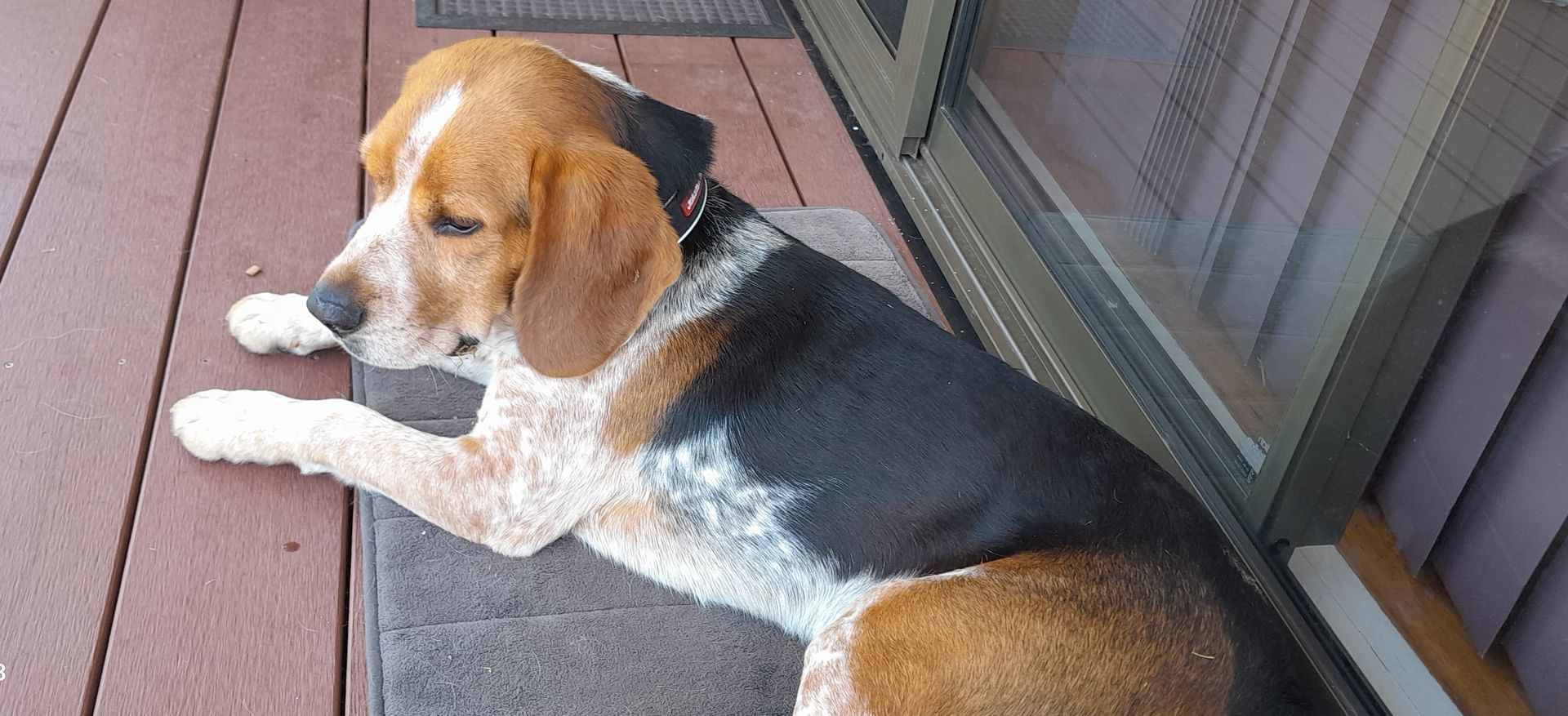
Among the assorted contents was a newsletter from Animals Australia – an organisation I’ve supported for several years. Periodical communications from the various charities who receive occasional donations often land in the letterbox around the end of the financial year – along with an appeal for some largesse. They all get put aside in the basket to be read later. Often it is weeks later, but an article in this one caught my eye because it featured a beagle. A dog that looked remarkably similar to our own Badger the beagle but this one had clearly drawn the short straw in life because it was being used in a laboratory for animal toxicity testing. Beagles, I read, are: “chosen for their gentle compliant nature . . . tied up and fitted with full-face gas masks that deliver test chemicals into their bodies.” The dogs are: “held in ‘metabolism cages’ as part of toxicity testing to enable the collection of their urine and faeces for study purposes. Discomfort and distress are part of a beagle’s life in testing labs.”


And not just beagles of course. Other animals subjected to this gross practice include rabbits, rats, mini-pigs and primates. The abhorrent practice, that‘s still being conducted in several countries, is being exposed by Animals Australia thanks to some courageous former lab workers who provided footage and documentation to this animal welfare organisation.


Like many people I was under the impression testing on animals was largely a thing of the past. Not so. Thank goodness there are people around the globe pushing for a transition away from this cruel practice – that is rarely relevant in the context of human response to these chemicals anyway given the significant biological and physiological differences humans have from species being subjected to these shocking tests.


Badger the beagle was a rescue dog, and doesn’t know how fortunate he is. The article also told the heart-warming story of a female beagle rescued from her lab testing existence, one that also included producing multiple litters of puppies for the toxicity testing lab. Too many others, sadly, are unlikely to be lucky enough to enjoy a few years at least of a happier life.


So well done Animals Australia and Animals International and if you want to learn more go to www.Toxicity.inc 


Share this post on socials

By Anne Layton-Bennett July 22, 2026
Attracting the interest of a publisher for this story of a community’s campaign to stop what would have been ‘the world’s fourth largest pulp mill’ being built was never going to be easy, but hoping the first of two 3-minute Literary Speed Dating pitch sessions will prompt at least one of the two publishers to request the full MSS. And preferably both of them. These twice-yearly Perfect Pitch sessions are offered to members of the Australian Society of Authors, and this is the first time I’ve taken advantage of them – mainly because of the need to have a completed MSS before doing so. Three minutes isn’t long to excite the interest of a publisher who is after stories in very specific genres, and who therefore needs to believe your MSS is worth investing the time needed to read it in full. I’m pretty certain I’ve excited the necessary interest, but given Jane will hear the pitches of many more optimistic and talented writers after my morning session today, there are no guarantees. That initial interest might well wane as the day goes on if other writers have written stories that sound far more intriguing – and marketable. One can never forget that aspect of publishing these days: will the book sell. I believe my story will – certainly in Tasmania it definitely will – but a wider Australian readership? That’s an unknown even if my mentor is convinced of the story’s universal appeal.  I’d certainly like to think I’ve caught the zeitgeist wave given the current widespread community unrest over AI data centres, that’s already prompting similar serious opposition, and for many of the same reasons the Tamar Valley’s community opposed the pulp mill. Environmental degradation, threats to public health, water usage – and water shortages in an era of escalating climate extremes – and the constant, relentless noise factor that’s associated with data centres, and AI data centres in particular. I’m crossing my fingers that the second pitch session will be equally positive, and that I could strike it lucky with both publishers requesting to see the full MSS. But I won’t get ahead of myself. I’ll just be keeping all fingers and toes firmly crossed for the next seven days.
Magni
By Anne Layton-Bennett June 14, 2026
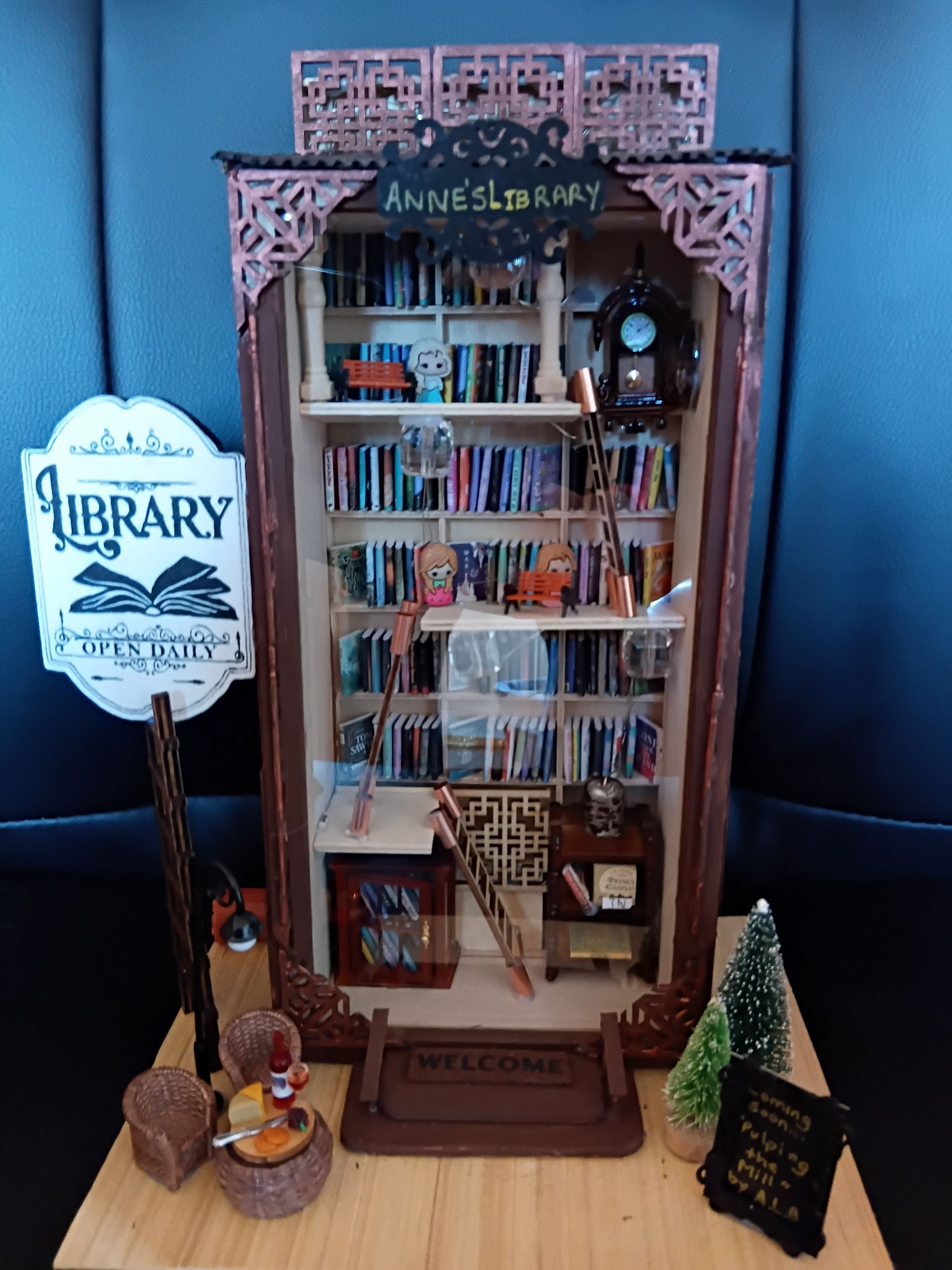
It’s taken far too many months for this marvellous model to grace the dedicated desk space in my office. When Fiona comes to visit next she will be very surprised, and hopefully gratified, that her amazing creative talent is finally on display. We’ve known each other for a very long time, and during the insanely busy time when I was helping to run the flower farm, working part-time in a school library, doing a spot of journalism on the side, and fighting the proposed pulp mill that is the subject of the manuscript I’m hoping to get published, Fiona cleaned my house each week. There’s only so much a person can do after all, and it has to be said cleaning our house during those manic years was fairly low down on the list of my priorities. But Fiona is a woman of many talents and she certainly possesses one that I so don’t have: sewing and dressmaking. So over the years she’s also made a few garments based on the pattern of a favourite garment that I was particularly fond of, and she’s also done some clothing alterations for both of us. My skills with needles and thread are limited to sewing on buttons, and taking up hems on John’s too-long pairs of jeans. Anything else is beyond me. But this fabulous model is the pièce de résistance – along with the beautiful crocheted knee warmer she gave me last year. This was when winter was approaching and so determined was I to finish writing the book, I decided to get out of bed at the insane hour of 5am and get in a solid hour’s writing in before dog walking and the demands of the day took over. Fiona was also one of many Tasmanians who needed to be circumspect about her opinion of the pulp mill. It was a project that polarised people, including families and friendships. She was one of several who passed on snippets of useful information, but on the basis of anonymity so it couldn’t be sheeted home to her.  Needless to say Fiona will be one of those whose contribution will be acknowledged – when this book is finally accepted by a publisher.
By Anne Layton-Bennett June 8, 2026
Early lambing season a sign of changing seasons? Or economic reality?

Latest from my blog...