September 19, 2019

Spring – a time of new life

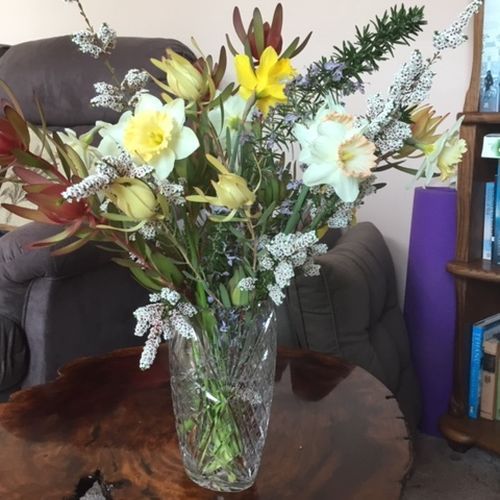
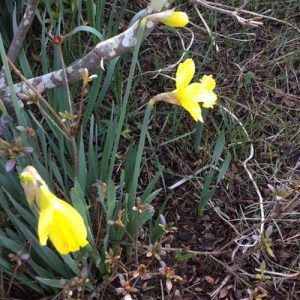
It’s always a relief when September arrives and we can finally wave winter goodbye for another year. While it’s true the lengthening days don’t always mean a sudden (and welcome) rise in temperatures, the bulbs are a colourful herald of summer, and iris, daffodils, freesias and bluebells are a cheerful sight, as well as a sure sign the garden is waking up.

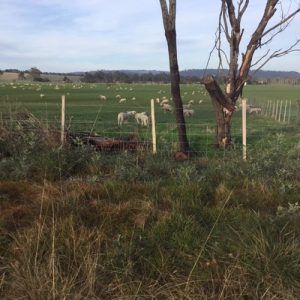
The swallows are back from their winter retreat, flying around, checking out last year’s nests, and building up their strength after their long flight as they prepare to start their families. Lambs and calves in the paddocks are more signs spring has arrived. So are the loud, proud and daily announcements of our chooks after the girls have laid another egg. Some of them go on a bit, as though their achievement is somehow unique, and then there are always the ones that are particularly motherly and simply cannot wait to sit, and hatch some chicks. We have to keep an eye on these free-ranging bantams, and watch where they nest. Chooks are canny, and are past masters at remaining hidden as they sit motionless on their eggs in a trance-like state, seemingly oblivious to everything around them.

The dark side to this cycle is that the seasonal pattern is well known to predators, and despite their much lauded vigilance and protective characteristics when it comes to their offspring, sometimes the predators win. More than one hen has vanished without trace over the years, presumably taken while on her nest. Or, as happened this week, when a newish and very protective bantam lost her chick to a rat or feral cat. The murderer then went on to dine on the three tiny eggs the same bantam’s teenage daughter had laid in a nest close by. We can only hope it won’t return for seconds.

On the roadsides there is evidence of other casualties; a flurry of feathers suggesting its plover or magpie parents lost the fight, as well as the bodies of roadkill: hares, rabbits and frogs, usually, but occasionally there is a duck from the Indian Runner flock up the road, or a guinea fowl from the same farm.

Lambs can sometimes fall prey to predators too, and reports of unrestrained packs of neighbourhood dogs are not uncommon in this semi-rural area, but thankfully this hasn’t been an issue so far this year.
So while spring is certainly a harbinger of renewal and new life, like every season it has its darker side, and it can also be a season of untimely death.

Share this post on socials

By Anne Layton-Bennett July 22, 2026
Attracting the interest of a publisher for this story of a community’s campaign to stop what would have been ‘the world’s fourth largest pulp mill’ being built was never going to be easy, but hoping the first of two 3-minute Literary Speed Dating pitch sessions will prompt at least one of the two publishers to request the full MSS. And preferably both of them. These twice-yearly Perfect Pitch sessions are offered to members of the Australian Society of Authors, and this is the first time I’ve taken advantage of them – mainly because of the need to have a completed MSS before doing so. Three minutes isn’t long to excite the interest of a publisher who is after stories in very specific genres, and who therefore needs to believe your MSS is worth investing the time needed to read it in full. I’m pretty certain I’ve excited the necessary interest, but given Jane will hear the pitches of many more optimistic and talented writers after my morning session today, there are no guarantees. That initial interest might well wane as the day goes on if other writers have written stories that sound far more intriguing – and marketable. One can never forget that aspect of publishing these days: will the book sell. I believe my story will – certainly in Tasmania it definitely will – but a wider Australian readership? That’s an unknown even if my mentor is convinced of the story’s universal appeal.  I’d certainly like to think I’ve caught the zeitgeist wave given the current widespread community unrest over AI data centres, that’s already prompting similar serious opposition, and for many of the same reasons the Tamar Valley’s community opposed the pulp mill. Environmental degradation, threats to public health, water usage – and water shortages in an era of escalating climate extremes – and the constant, relentless noise factor that’s associated with data centres, and AI data centres in particular. I’m crossing my fingers that the second pitch session will be equally positive, and that I could strike it lucky with both publishers requesting to see the full MSS. But I won’t get ahead of myself. I’ll just be keeping all fingers and toes firmly crossed for the next seven days.
Magni
By Anne Layton-Bennett June 14, 2026
It’s taken far too many months for this marvellous model to grace the dedicated desk space in my office. When Fiona comes to visit next she will be very surprised, and hopefully gratified, that her amazing creative talent is finally on display. We’ve known each other for a very long time, and during the insanely busy time when I was helping to run the flower farm, working part-time in a school library, doing a spot of journalism on the side, and fighting the proposed pulp mill that is the subject of the manuscript I’m hoping to get published, Fiona cleaned my house each week. There’s only so much a person can do after all, and it has to be said cleaning our house during those manic years was fairly low down on the list of my priorities. But Fiona is a woman of many talents and she certainly possesses one that I so don’t have: sewing and dressmaking. So over the years she’s also made a few garments based on the pattern of a favourite garment that I was particularly fond of, and she’s also done some clothing alterations for both of us. My skills with needles and thread are limited to sewing on buttons, and taking up hems on John’s too-long pairs of jeans. Anything else is beyond me. But this fabulous model is the pièce de résistance – along with the beautiful crocheted knee warmer she gave me last year. This was when winter was approaching and so determined was I to finish writing the book, I decided to get out of bed at the insane hour of 5am and get in a solid hour’s writing in before dog walking and the demands of the day took over. Fiona was also one of many Tasmanians who needed to be circumspect about her opinion of the pulp mill. It was a project that polarised people, including families and friendships. She was one of several who passed on snippets of useful information, but on the basis of anonymity so it couldn’t be sheeted home to her.  Needless to say Fiona will be one of those whose contribution will be acknowledged – when this book is finally accepted by a publisher.
By Anne Layton-Bennett June 8, 2026
Early lambing season a sign of changing seasons? Or economic reality?

Latest from my blog...