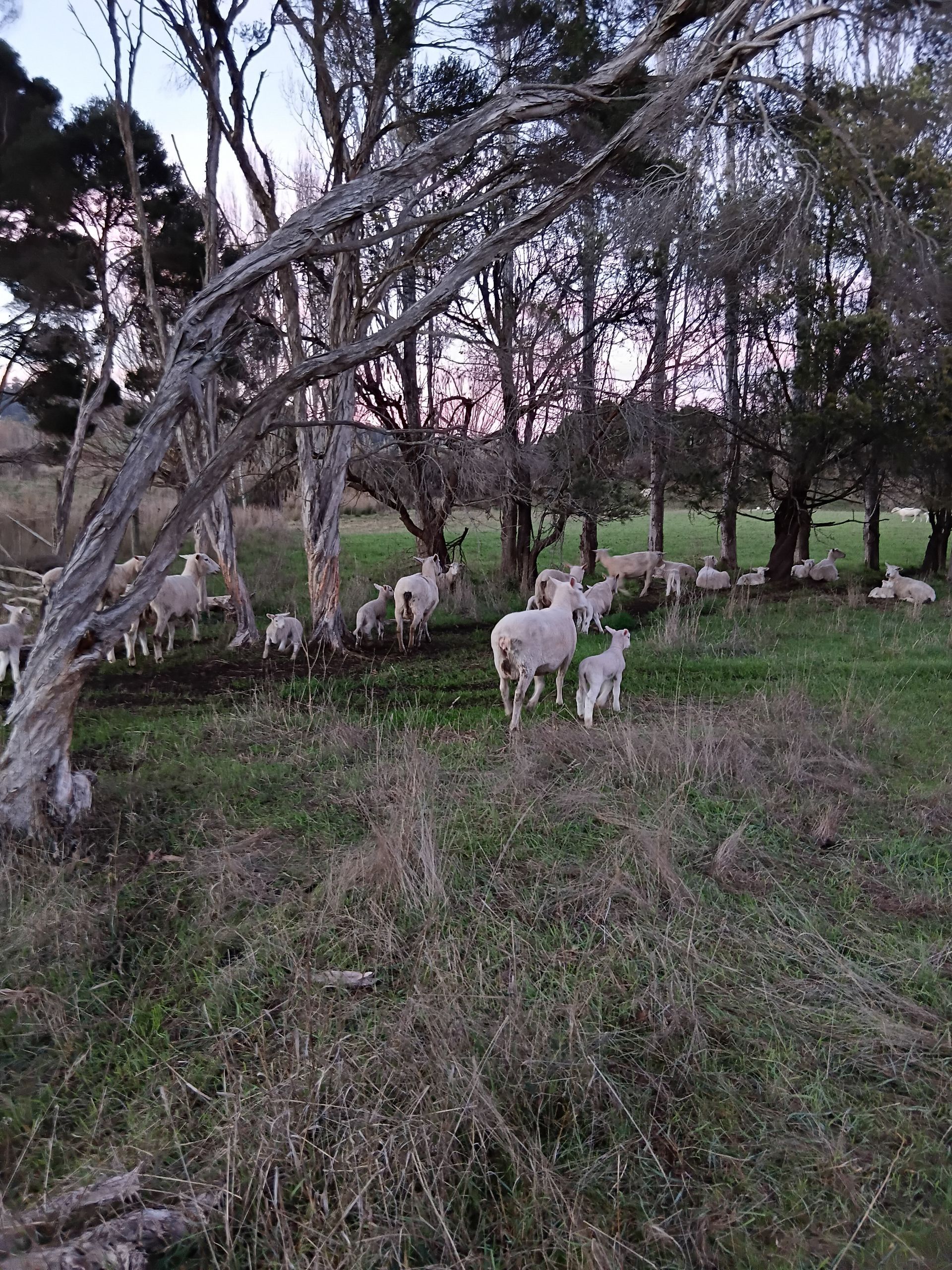
We would normally expect to be seeing lambs frolicking in the paddocks across from our property towards the end of June, so it was a surprise this year to see a couple of new-born lambs at the end of May. Admittedly it was only a couple before the main event. These two were the vanguard heralding a population explosion several days later. Even so I can’t remember lambing beginning quite so early. Certainly not before the ‘official’ start of winter on June 1st.
So for the next few weeks when we walk Badger the beagle in the afternoon we’ll watch these lambs grow from their undeniably new-born cute phase through to their less agile teenage period until one day there will be a noticeable absence of them from the paddocks. After an all too short a life they will be on a journey to the abattoir, or perhaps (if they’re lucky) to a reprieve for a few years, designated as the next generation of mothers. Farming can be a rather brutal life cycle for both sheep and cattle raised for their meat, but that is the reality. I can only silently assure them as we watch both lambs and calves grow up, that neither will end up on my dinner plate since I haven’t eaten the meat of either species for decades.
But why this year lambing has begun so early is a mystery. A simple case of farming economics, or another example of climate change affecting the rhythm of farming seasons?
It’s certainly affected some of the bulbs. Some of the early spring bulbs have also shot up early. We don’t expect to see them in flower until late June or early July but a few are already blooming. They may withstand the frosts but if forecasters are right and a warmer winter is on the way, maybe that won’t be necessary.
We’ll find out soon enough.
Share this post on socials