Although not written initially as a blog post, it’s certainly relevant in the context of the larger work I’m writing. It’s also relevant in the context of the importance of community in today’s world, and why communities everywhere need to be nurtured, and not deliberately smashed to pieces for no good reason that anyone can see, as ours has been.
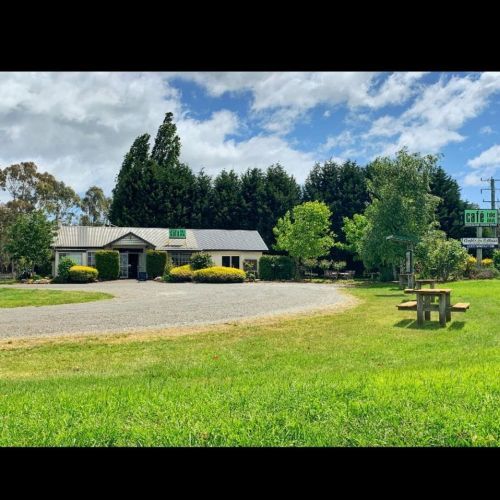
Whatever the reason behind our local café owner’s decision to make the life of leaseholder Fleur so difficult she’s closing the business, he has certainly succeeded in ripping out the heart of our community. His unreasonable attitude means we’ve all lost something infinitely precious, and potentially irreplaceable, and it’s left many people – myself included – both devastated, angry and deeply disappointed. Not only for Fleur, but for our community as a whole. In the words of Joni Mitchell’s song: You never know what you’ve got ‘till it’s gone.
But some of us do know. And only too well.
The word ‘community’ has become something of a buzzword. Politicians use it all the time – especially during and since the emergence of COVID when the importance of community was suddenly considered essential to wellbeing. Which it is. A strong and supportive community is also powerful. Our community has proved that many times over the years. And since it first opened, central to all those times, has been the the East Tamar’s Windermere Shop/Café.
A short history lesson
There was neither shop nor café when we first moved here. If you needed another carton of milk or loaf of bread it meant a drive to Mt Direction Service Station, or to Newnham. There was no highway either, or not as we know it now. The highway included John Lees Drive, and for the first several months we lived here it ended at Rocherlea. That last bit from Landfall to the university exit hadn’t been completed. No wonder people equated living out here to being in the sticks. Dilston, Windermere and Swan Bay were relatively isolated and largely separate communities, where immediate neighbours could be several paddocks away.
Maybe that isolation prompted long-term resident Mike to establish the volunteer fire brigade. From all accounts this brought many neighbours from each of the three communities together as fundraising events at Dilston Hall were organised so a fire truck could be purchased. The fire brigade was also the catalyst for our community newsletter Smoke Signals. It was former resident Eric’s contribution to the brigade. His health precluded him from being a firefighter, but his computer skills, at a time when PCs were still relatively uncommon, were significant. But those early issues of Smoke Signals helped to inform new and existing residents about the various opportunities in our area. The aptly titled Smoke Signals contained contact details for local activities such as the playgroup, walking group, book group, sewing circle and garden club – as well as the fire brigade. And joining these groups was how many in the community first met each other.
We’d lived here for a couple of years when the first hints about a corner shop opening were heard. The knowledge we could soon have a local convenience store was exciting. Sure, items were more expensive than the supermarket, but I doubt I was alone in ensuring a few staples were bought there each week to support the fledgling business and the local family who had decided to set it up.
Over the years various people have run the shop/café, some more successfully than others. The years when it was operated by Kerrie and Maree were undoubtedly among the best. Their warmth and friendliness drew people in. People dropped by just to have a chat as they picked up a newspaper or packet of lollies. These years straddled much of the pulp mill campaign. For those unaware, this was an environmental fight to stop failed timber company Gunns Ltd build a massive pulp mill near Bell Bay. Google it to find out more, but suffice to say the campaign was long, hard, bitterly divisive and exhausting, but it was the strength of the community that ultimately ensured the project failed. That it did was due in no small measure to the efforts of those in our East Tamar community, as well as the Tasmanian community more broadly.
It was the pulp mill campaign that also resulted in the long-awaited tick of approval for the bypass that finally diverted traffic from thundering through Dilston. The diversion wasn’t necessarily such good news for the café though. Lack of passing traffic meant a drop in the shop’s takeaway food business. To compensate Kerrie and Maree took a huge risk with the first of the Thank God It’s Friday evenings. The instant and enormous popularity of these weekly gatherings took both by surprise.
But so many of us knew each other by now, and the TGIF evenings ensured many more in the neighbourhood did so too. Several new arrivals were welcomed into our community, settling in quickly to become valuable friends and neighbours. Such was TGIF’s reputation, people chose to buy here because of TGIF’s reputation! These were the years when the shop/café’s position as the hub and heart of our community was cemented. Fleur came on board during this time and the café became the go-to place for so many events and functions. It hosted birthday parties, music afternoons, book and garden club lunches and dinners, fundraisers for various organisations, as well as providing a safe and supportive space for many people in our community who were facing some of the challenges of life’s ups and downs.
Thanks to our strong and proactive community we have a safer exit onto the highway from John Lees Drive. Again the pulp mill campaign is largely responsible. We all knew each other by the time this was raised and were aware of the wealth of engineering expertise among certain individuals. These were people able to point us in the right direction, and to argue convincingly and knowledgeably to ensure we received the safest infrastructure option.
Likewise, when the NBN was being rolled out, and our region became a political football with the off again/on again situation, we knew who to call. That this community was finally included on the NBN map is down to committed members of a strong community who met regularly at the Windermere Café to work out the best lobbying strategies.
Most recently it was our feisty and motivated community that gathered together once more to ensure funds were raised to prevent the Anglican Church selling off our historic St Matthias Church to help pay redress to victims of abuse.
The café then, not to mention Fleur herself, has been instrumental in forging the strong community bonds our region is renowned for. So it’s bitterly disappointing that the café’s owner apparently neither cares, appreciates or understands the café’s importance for our community’s collective health and wellbeing.
Maybe one day he will. Before it’s too late.
Share this post on socials