With September not far away theoretically we’re nearing the finishing line so far as winter goes, and from the look of them some of my houseplants are feeling the same way I do: hanging out for some warmth, sunshine and freedom from all the layers of clothing needed to stay warm. Not that we haven’t had any sunshine over the past three months, but there’s not always been much warmth to it, and it certainly hasn’t always filtered through to every room in the house for very long. It’s the perennial problem with houseplants in colder weather, moving them around so they aren’t too stressed by the changes in temperature. There’s only so many that can be housed in the rooms kept heated throughout winter; the others all just have to cope and as we near winter’s finishing line some are not coping too well.
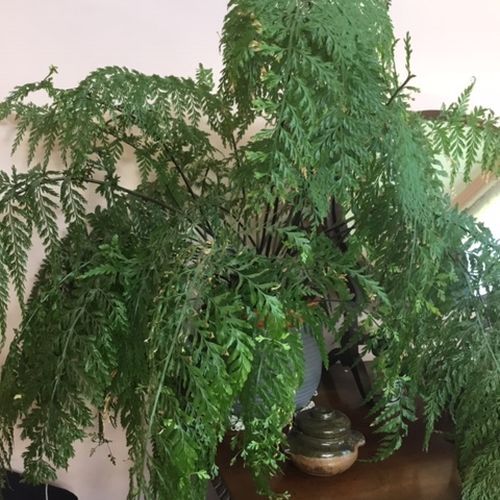
My spectacular Asplenium bulbiferum or hen and chicken fern – and my pride and joy – is quite happy, ferns being quite comfortable in cooler temperatures, and the ‘chicks’ I’ve successfully propagated from the ‘hen’ are also doing very nicely thank you. All are going to need re-potting in a few weeks, and the ‘hen’ is also going to need a larger plant pot holder. Again.
I can’t quite remember how I came by this plant – which I’ve had for years – but I do remember it becoming extremely sick and on the point of death some time ago, losing all its fronds one by one. Nothing I did seemed to restore it to health. Stubbornly I refused to admit it was dying, and my faith was eventually rewarded when a new frond or two finally peeped out. From that moment on it has never looked back, and is now seriously impressive, to the point I’m not actually quite sure where it’s going to live, having all but outgrown its position in the bedroom on the dressing table. Interestingly one of its ‘chicks’ is in a similar state of ill-health, and I’m in two minds about whether or not to persevere, or for how long. Maybe I’ll give it a few more weeks yet before declaring defeat.
Other than the ‘nodding violets’ or streptocarpella saxorum to give it its botanical name, my other plants tend to all be refugees, either from life in the florist shop (and since we sold the shop around 25 years ago this makes them all pretty good survivors), or my years in a school library. Again, while this makes the piece I found broken off and which I brought home to try and rescue, makes it not so long in the tooth, it has grown rather rapidly to the point of being another challenge to re-position when it next needs re-potting.
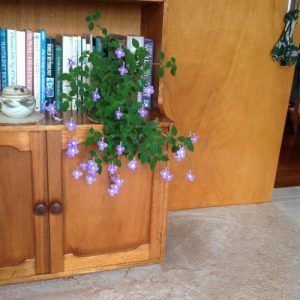
The nodding violets all grew from a cutting given to me by Betsy, a friend and fellow writer I met when we both were in the same women writers group. She broke off a piece from her prolifically flowering plant one day saying it was easy to establish from a cutting. And it was, so now I have several of them – but all are looking like they’ll be happy to see the back of the cold weather.
As will I.
Share this post on socials